Home battery storage: what to know before buying
Capacity, inverter compatibility and realistic expectations for a household
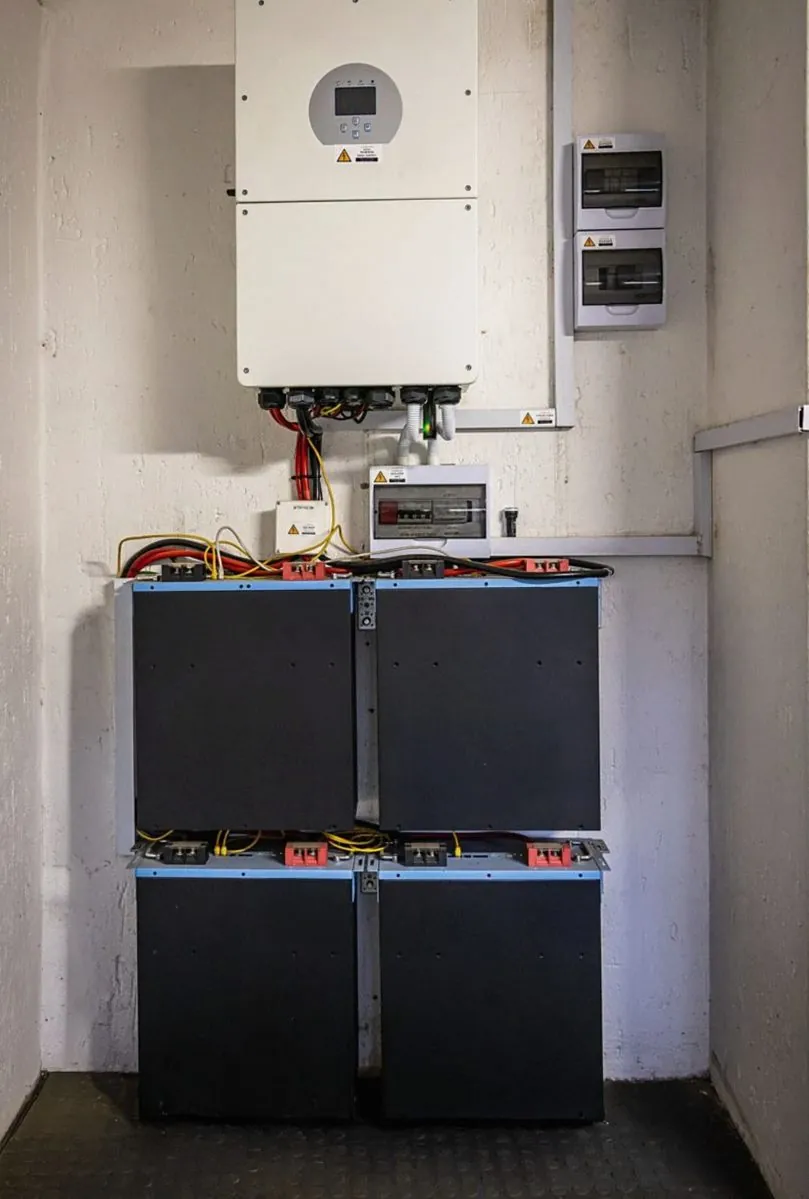
Interest in home batteries has grown in Japan, partly because of worry about power cuts in typhoon season and partly because the economics of using your own solar power have changed as FIT purchase rates have come down. This note covers the practical questions that come up most often when a household considers storage.
What a home battery actually does
A home battery stores electricity that the panels produce during the day and makes it available in the evening, when they no longer produce. For a household that uses most of its electricity after dark, storage can raise the share of solar output that is used at home instead of exported.
Storage also gives some resilience in short outages. Most home systems in Japan are set up to back up a limited set of circuits, typically lighting, a refrigerator and a few outlets, and are not designed to run a whole house at full load. Check the product specification for the actual output during an outage and for how long it can be sustained.
Sizing the battery
Capacity is measured in kilowatt-hours. As a rough way of thinking: if your household uses 4 kWh in the evening, a battery much smaller than that will run out early, and one much larger than your daily surplus will rarely fill. The right size depends on how much your panels produce compared with what the house uses during the day. A household that runs air conditioning at midday has less surplus to store than one where everyone is out until evening. Your electricity bills and, if you have one, your monitoring data show the pattern.
Inverter compatibility: the question to ask first
Not every existing solar inverter supports a battery. Some older inverters have no battery interface, and adding storage to them can mean replacing the inverter or adding a separate AC-coupled unit, which has its own efficiency trade-offs. Ask the manufacturer or your installer, with the model number in hand, before you look at battery prices.
If you are planning solar and storage together, the question is simpler because the components are chosen as a set. For a retrofit it is the first thing to settle.
Storage is not the right choice for every household, and whether it pays back depends on your consumption, your tariff and your existing system. A review of your own usage data is a better starting point than a brochure. We make no promise about savings or backup duration on this site: any figure we give for your property is an estimate, in writing, with its assumptions.